Building Regulations
Stay up to date with the latest ventilation building regulations and compliance guidance to keep every project on track.
Useful resources and information
Your go-to online resource for ventilation expertise, building regulations, compliance updates and practical advice. Access blogs, case studies, guides, training, and webinars to help solve issues like condensation, mould, and indoor air quality challenges.
Stay up to date with the latest ventilation building regulations and compliance guidance to keep every project on track.
Understand and meet the requirements of Awaab’s Law, ensuring healthy, compliant homes and properties.
Explore our expert blogs below covering ventilation, mould prevention, condensation solutions, building regulations, and practical tips.
Access all our PDFs, guides, and resources for our range of ventilation products – everything you need in one place.
Filter by type


Based in Harrogate, North Yorkshire, EnviroVent is your trusted UK ventilation partner – helping every home, property and project breathe better. For over 35 years, we’ve been passionate about creating healthier indoor environments through innovative, sustainable ventilation solutions.
As a UK manufacturer with our own in-house installation team, we provide a complete service – from expert system design and technical support to installation and aftercare. Our award-winning range includes MVHR, MEV, dMEV, PIV, extractor fans and ducting solutions, designed to deliver good indoor air quality all year round.
We work closely with social housing providers, housebuilders, developers, M&E professionals, electricians, landlords and homeowners – offering trusted expertise, compliance guidance and ongoing support. At EnviroVent, our mission is simple: to make every home a healthier, fresher place to live.
Explore our range of MVHR, MEV, dMEV, PIV, extractor fans, ducting and ancillaries. Or get expert advice, system design support and compliance guidance for your property or project.
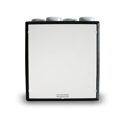
The energiSava® 260 is a mechanical ventilation with heat recovery unit incorporating an EC motor, providing optimum ventilation for a property with a minimum loss of energy.

QURO®-LC is a low profile, quiet running, powerful ventilation unit which includes multiple speed options providing flexibility to meet the requirements of all wet rooms in a property including a kitchen, bathroom, utility, en-suite and WC.

The ATMOS® range are loft mounted Positive Input Ventilation (PIV) systems that are designed to reduce mould and condensation and improve indoor air quality within a property.
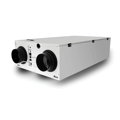
The high-efficiency SLIMLINE 300, a mechanical ventilation with heat recovery unit, is ideal for ceiling mounted applications such as apartments, properties with a lack of storage space, and student accommodation to provide optimum ventilation
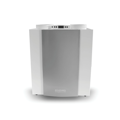
The energiSava® 400, a mechanical ventilation with heat recovery unit, is ideal for residential properties to provide a constant supply of tempered air and maintain stable humidity levels. With maximum airflow capacities of 400 m3/h respectively, the unit is available in left-handed and right-handed versions with a range of options for connecting the ducts.
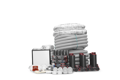
The envirovent® kit is the most complete MVHR system on the market it includes everything you will need to install the system right down to the screws and sealant. The kit is suitable for properties with up to 3 bedrooms and that have a floor area below 130m².

The MEV300 is a continuous running centralised whole house mechanical extract ventilation system. It is versatile, compact and delivers high airflow performance. Ideal for houses, apartments and other communal residences, such as care homes and student accommodation.

The INFINITY 8 is a continuous running extractor fan suitable for WCs, bathrooms, utility rooms and kitchens. It is a major advancement in extractor fan technology; it utilises a centrifugal impeller and our Intellitrac technology which ensures extremely high airflow performance and humidity levels are controlled all year round.

The CYCLONE 8 is a continuous running extractor fan suitable for WCs, bathrooms, utility rooms and kitchens. It is a major advancement in extractor fan technology; it utilises a centrifugal impeller and our Intellitrac technology which ensures extremely high airflow performance and humidity levels are controlled all year round.

The ATMOS® WALL range are wall mounted Positive Input Ventilation (PIV) systems that are designed to reduce mould and condensation and improve indoor air quality within flats or apartments.
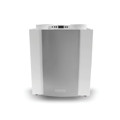
The energiSava® 300, a mechanical ventilation with heat recovery unit, is ideal for residential properties to provide a constant supply of tempered air and maintain stable humidity levels. With maximum airflow capacities of 300 m3/h respectively, the unit is available in left-handed and right-handed versions with a range of options for connecting the ducts.

The energiSava® 200, a mechanical ventilation with heat recovery unit, incorporates a powerful backward curved EC motor, mechanical summer bypass and delivers exceptional performance within a compact unit.

The Fast Track® ducting range is a semi-rigid, click and connect, radial ducting solution suitable for a wide range of scenarios to minimise air leakage and reduce installation times.

The Fast Track® Plus ducting range is a click and connect, radial ducting solution suitable for a wide range of scenarios to minimise air leakage and reduce installation times.

60+ Local Specialists
Get expert advice from our ventilation specialists on condensation, mould, products, system design, compliance and training.
Experts solutions and support. From surveys and product selection to design, training and installation.
Need help with mould or condensation problems - arrange a free survey today
Our nationwide network of trained engineers are Which accredited
Select the right ventilation product for your home, property or project
Get expert advice from our ventilation specialists on condensation, mould, products, system design, compliance and training
Compliant, project-ready ventilation designs from our expert team
Find your ideal product based on the technical requirements of the project
Master ventilation compliance with envirovent - from CPD's to NICEIC training
Personalised quotes based on your project or property requirements