- News Article
- gas
- Radon
Radon Gas Should Not Be Ignored
Written By Ruth MacEachern15 September 2023
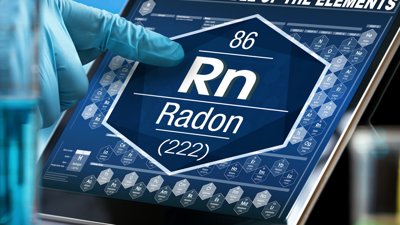
n some parts of the UK, levels of Radon gas can exceed safe levels, and when concentrated in a poorly ventilated environment, can increase the risk of developing lung cancer. According to Public Health England, around 50% of the radiation that we are exposed to every year comes from Radon.
Radon is invisible. It is both colourless and odourless and can only be reliably measured using a special detector that can determine how much is present in your home.
The gas is naturally generated from the decay of radioactive materials in bedrock and soil, and permeates into buildings through the floor, concentrating in poorly ventilated areas where it becomes a risk to health.
The amount of Radon that is present through most of the country is harmless, as the gas is not dangerous in small amounts, however in some areas such as South West England and the East Midlands, as well as parts of Scotland and Wales, the level of granite and other igneous rocks in the local geology can lead to high levels of radon that make their way into homes.
As the gas is present in the environment, it makes its way into all buildings in the same way as the air you breathe normally – through walls and floors. It does not make much difference whether your house is brand new or a hundred years old. Once inside the building, the ionising radiation that it releases creates particles called Radon Daughters which can be inhaled and become trapped in your airways where tissue damage can be caused.
Reducing Your Radon Exposure
There are several steps that you can take to reduce the amount of exposure you have to Radon. While some of these are relatively ineffective, such as sealing gaps between floorboards or loft hatches, they can in fact make things worse because they reduce the airflow through the house which helps to reduce damp and condensation, as well as reducing the concentration of Radon in your indoor air.
Positive Input Ventilation Systems (PIV) are effective in reducing Radon build up because they “flush” clean air through the house. Fresh air is drawn in from outdoors, filtered to remove impurities and then distributed through to individual rooms. As this fresh air circulates back outdoors, it dilutes the amount of Radon that can persist.
PIV systems can be installed in almost any property and are low energy – once installed and running they use less electricity than a low energy lightbulb.
Find out more
Contact us today to book your free home survey. Our local ventilation specialists can visit your home to provide you with advice about the best solution for your property. Simply enter your postcode in the form below to find a ventilation expert near you.
Meet The Author

Ruth MacEachern
Product Manager
Ruth is recognised for her deep technical knowledge and regulatory insight.
With over 10 years’ experience in the building industry - across sales, planning, supervision and product management - Ruth combines deep regulatory expertise with real-world application. She holds a four-year degree in Building Control, graduating with the highest marks in her class and winning an award for her dissertation.
Ruth has worked closely with Building Control Officers on complex, high-risk projects, including post-Grenfell work, helping interpret regulations and guide compliant outcomes. Today, she plays a central role in Research and Development, shaping products, technical guidance and education across the industry through technical writing, articles for our blog, and webinars.
Passionate about raising standards, Ruth is driven by one goal: Making ventilation clearly understood, properly specified, and taken seriously.