- News Article
- gas
- Radon
Reduce the Risk of Radon Exposure in Your Home
Written By Ruth MacEachern15 September 2023
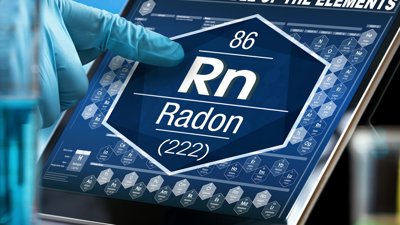
An unseen risk in many homes is the presence of Radon. Radon is a colourless, odourless radioactive gas which is formed during the decay of the small amounts of naturally occurring uranium found in rocks and soil.
Every building contains some amount of Radon, but the presence varies across the UK. Some areas have a higher concentration of the gas depending on local geology.
What areas are most at risk of Radon?
The Southwest of England – particularly Devon and Cornwall have the highest levels of Radon in the UK, but other areas where there is a higher amount of granite in the geology also produce above average emissions. These areas include much of Wales, the Pennines and along the Severn river. The mountains of Eastern Scotland have high concentrations of Radon, as do areas in the southwest of Northern Ireland.
Public Health England have conducted a nationwide survey of where Radon levels are highest, and in those areas, households will often monitor the presence of the gas and take action to maintain safe levels.
What are the effects of Radon?
Radon gas is dangerous, and exposure can impact the health of the occupants in a property where the gas is present.
When a person breathes in Radon gas, particles can become trapped in their lungs and long-term exposure increases the risk of lung cancer. After smoking, radon is the second biggest cause of lung cancer in the UK and as such is a major health risk that requires householders to act.
Measuring Exposure to Radon
In areas with higher concentrations of radon, households will usually have a monitor that measures levels continuously. These monitors work by detecting radiation and checking that levels remain safe. Radiation is measured in units called becquerels. The NRPB has advised the Government that a home with radon levels of 200 becquerels and above should be reduced to as low as reasonably possible.
Reducing Radon Emissions
The nature of radon emissions from the decay of rocks below ground means that it is nearly impossible to reduce the amount of Radon in the wider environment, however it is possible to attain lower levels within buildings and as a result reduce health risks.
The government recommends proper ventilation as one important way of mitigating the amount of radon in a home or building. Whole house ventilation units are generally the most effective option for reducing build-up of Radon.
Positive Input Ventilation (PIV) is a whole house system in which fresh air is continually circulated into a building to replace air and ensure that levels of Radon cannot increase over time (in homes which have Radon levels below 500 Bq/m3). In addition to this immediate benefit to long term health, good ventilation will also improve indoor air quality in multiple other ways. Better air flow means less opportunity for damp and mould problems to build up over time which is helpful for people with allergies or asthma or who suffer from a reaction to mould.
Find out more
For more information about how PIV systems can help improve air quality and contribute to long term health, please contact one of our local specialists who can discuss your options. Contact us today to book your free home survey. Our local ventilation specialists can visit your home to provide you with advice about the best solution for your property. Simply enter your postcode in the form below to find a ventilation expert near you
Meet The Author

Ruth MacEachern
Product Manager
Ruth is recognised for her deep technical knowledge and regulatory insight.
With over 10 years’ experience in the building industry - across sales, planning, supervision and product management - Ruth combines deep regulatory expertise with real-world application. She holds a four-year degree in Building Control, graduating with the highest marks in her class and winning an award for her dissertation.
Ruth has worked closely with Building Control Officers on complex, high-risk projects, including post-Grenfell work, helping interpret regulations and guide compliant outcomes. Today, she plays a central role in Research and Development, shaping products, technical guidance and education across the industry through technical writing, articles for our blog, and webinars.
Passionate about raising standards, Ruth is driven by one goal: Making ventilation clearly understood, properly specified, and taken seriously.