• News Article
  • Radon
  • gas

What is Radon Gas and How Can I Remove It From My Home?

Written By Ruth MacEachern19 July 2022
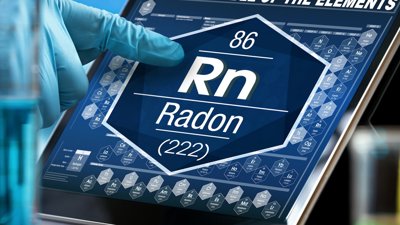
Poor indoor air quality can have a serious effect on our health, and seeing as the average person spends around 90% of their time indoors, good indoor air quality really is vital to form a healthy living environment. General contributors to poor indoor air quality include condensation and mould, Volatile Organic Compounds (VOCs) and allergens from house dust mites. However, there could be something far worse lurking in the background… a gas called Radon.

What is Radon and why is it so dangerous?

Radon is a naturally occurring radioactive gas, which can enter your home from the ground. Mainly lingering around the South West, East Midlands and other places with high levels of granite and other igneous rocks, radon penetration occurs in thousands of homes in the United Kingdom. However, it’s interesting to note that not all granitic regions are prone to high emissions of this radioactive gas known as radon; if the rock lacks pores/cracks then the gas will have no way of migrating.

As the uranium (found in most rocks and soils) begins to decay, it produces radium, which in turn produces a new radioactive element - Radon. As the radioactive gas decays it produces another radioactive element called Radon daughters. And it gets worse! The Radon daughters attach themselves to dust particles in the air and, if inhaled, they will stick to the airways of the lung. This is why Radon is particularly dangerous and damages the health of those living in a property where this gas is present. According to the National Radiological Protection Board (NRPB), health studies have linked exposure to Radon to the increased risk of lung cancer.

But, not to fear – there are ways of preventing Radon from ever entering your home, let alone your airways! Thankfully, there are ways of completely eradicating Radon from your household too. Although Radon is impossible to detect by sight, smell or taste, detectors are used measure it. Scaling over a three-month period, the detectors are analysed to determine whether the level exceeds the UK Action Level for Radon, which is at or above 200Bqm-3.  The levels of radiation in the household should then be controlled.

How can you remove Radon gas from your home?

Believe it or not, preventing the dispersion of Radon is remarkably simple. All you need is proper ventilation! Proven to be effective in significantly reducing Radon levels, Positive Input Ventilation (PIV) is a concept designed to supply fresh air throughout the property. As a result, the process changes the airflow direction within the dwelling, in order to force the air contaminated by Radon out of the home. And if that wasn’t enough, you’ll be happy to hear that PIV units save on heating bills and provide whole home ventilation solutions for all year round good indoor air quality.

Find out more

Contact us today to book your free home survey. Our local ventilation specialists can visit your home to provide you with advice about the best solution for your property. Simply enter your postcode in the form below to find a ventilation expert near you.

Meet The Author

A young woman smiling in a friendly way.

Ruth MacEachern

Product Manager

Ruth is recognised for her deep technical knowledge and regulatory insight.

With over 10 years’ experience in the building industry - across sales, planning, supervision and product management - Ruth combines deep regulatory expertise with real-world application. She holds a four-year degree in Building Control, graduating with the highest marks in her class and winning an award for her dissertation.

Ruth has worked closely with Building Control Officers on complex, high-risk projects, including post-Grenfell work, helping interpret regulations and guide compliant outcomes. Today, she plays a central role in Research and Development, shaping products, technical guidance and education across the industry through technical writing, articles for our blog, and webinars.

Passionate about raising standards, Ruth is driven by one goal: Making ventilation clearly understood, properly specified, and taken seriously.